
There are places in Europe that dominate every travel guide and Instagram feed. And then there are places like Oradea Fortress – quietly magnificent, historically rich, and surprisingly overlooked. Located in western Romania, near the Hungarian border, this restored medieval citadel is one of the country’s most underrated destinations.
If you’re the kind of traveler who prefers discovering places before they become crowded, Oradea Fortress may be exactly what you’re looking for.
A Fortress That Shaped a Region
Oradea Fortress, known locally as Cetatea Oradea, has stood for nearly 900 years. Its origins date back to the 11th century, when it functioned as a fortified monastery and religious center. Over the centuries, it evolved into a major defensive stronghold influenced by Hungarian royalty, Ottoman incursions, and later Habsburg military architecture.
Walking through its massive gates today, you can feel the weight of that layered history. The brick walls, thick bastions, and expansive inner courtyard tell a story of political struggle, religious influence, and strategic importance in Central and Eastern Europe.
Unlike many historic sites that feel static or museum-like, Oradea Fortress has been carefully restored and reintegrated into the life of the city. It is both a monument and a living cultural space.
Renaissance Geometry and Military Precision
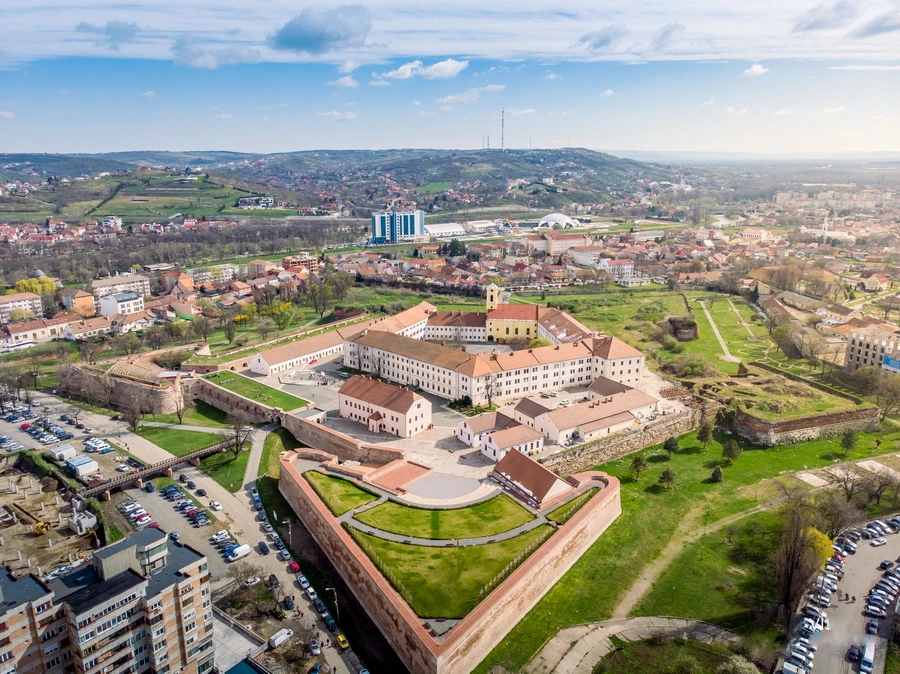
One of the most striking aspects of Oradea Fortress – Cetatea Oradea – is its pentagonal, star-shaped design. Built in Renaissance style to withstand artillery attacks, the fortress reflects advanced military engineering for its time. The geometric layout becomes especially impressive when viewed from above, but even at ground level, the structure feels deliberate and powerful.
The defensive walls are thick and imposing, yet the atmosphere inside is surprisingly open. The central courtyard stretches wide, framed by restored buildings that once served administrative, religious, and military purposes. Today, these spaces host exhibitions, workshops, and events that give the fortress new energy.
There’s something compelling about standing in a structure designed for war that now serves as a space for art, music, and community gatherings.
A Cultural Heartbeat Inside Medieval Walls
What makes Oradea Fortress more than just another historical landmark is how alive it feels. Throughout the year, the inner courtyard transforms into a venue for festivals, food fairs, concerts, and cultural events. Medieval reenactments, craft markets, and open-air performances regularly bring both locals and visitors together.
The museum sections inside the fortress provide deeper insight into the region’s past. Exhibitions explore Oradea’s medieval history, archaeological discoveries, religious heritage, and military development. The displays are modern and accessible, making the experience engaging even if you’re not a history enthusiast.
Why Oradea Fortress Still Feels Undiscovered
Despite its size and historical importance, Oradea Fortress has not yet entered the mainstream European travel circuit. That’s precisely what makes it special. You can walk along the ramparts without fighting through crowds. You can take photos without waiting in line. You can sit in the courtyard and simply absorb the atmosphere.
The entry fees are modest compared to major Western European fortifications, and the experience feels authentic rather than commercialized. Locals use the space naturally – attending events, strolling through the courtyard, or enjoying a quiet afternoon inside the walls.
In an era of overtourism, this kind of balance is rare.
The Surprise of Oradea Itself
Part of the magic of visiting Oradea Fortress is discovering the city around it. Oradea has undergone an impressive transformation in recent years, revealing one of the most beautiful collections of Art Nouveau architecture in Romania.
After exploring the fortress, a short walk leads you to Union Square (Piața Unirii), where colorful Secession-style buildings line the streets. The Black Eagle Palace, the Moon Church, and the meticulously restored façades give the city a refined, almost Central European elegance.
The contrast between the medieval fortress and the Art Nouveau city center creates a layered travel experience that feels richer than many larger destinations.
When to Visit
Oradea Fortress is open year-round, and each season offers a slightly different experience. Spring brings greenery and pleasant weather. Summer energizes the fortress with festivals and open-air events. Autumn adds warm tones to the brick walls and surrounding spaces. Winter, especially after snowfall, gives the bastions a quiet, atmospheric charm.
A Destination Worth Discovering Now
Oradea Fortress is not flashy. It doesn’t rely on dramatic legends or viral fame. Instead, it offers something deeper – authenticity, architectural beauty, and a genuine connection to history.
For travelers seeking Europe beyond the obvious, Cetatea Oradea represents the kind of place that still feels personal and unspoiled. It rewards curiosity. It invites slow exploration. And it leaves you wondering how it has remained under the radar for so long.
Here at unpopular.network, we believe the best journeys begin where the crowds haven’t arrived yet. Oradea Fortress is proof that some of Europe’s greatest experiences are still waiting to be discovered.


